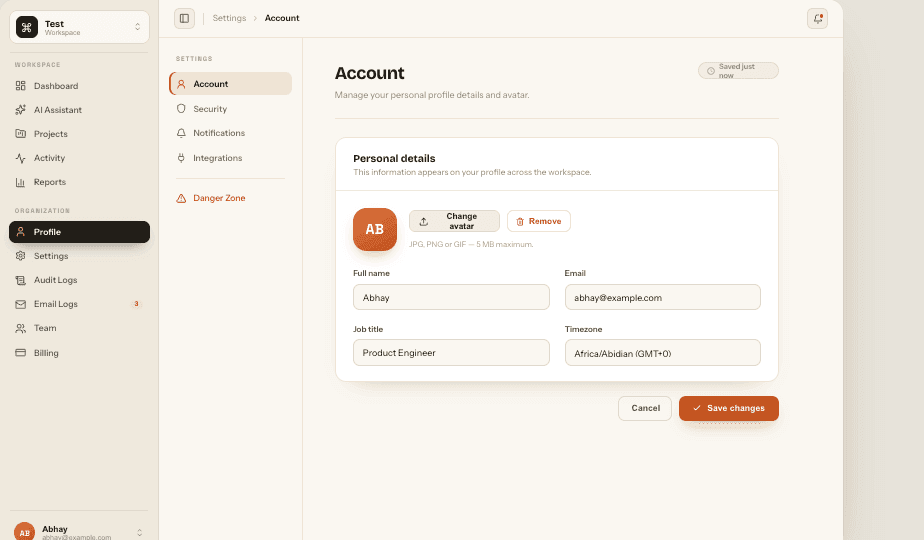
Sign-in that passes a security review.
Devise sessions, Google and GitHub OAuth, and TOTP two-factor with recovery codes.
The Rails + React starter with everything already wired. Pay once, ship forever.
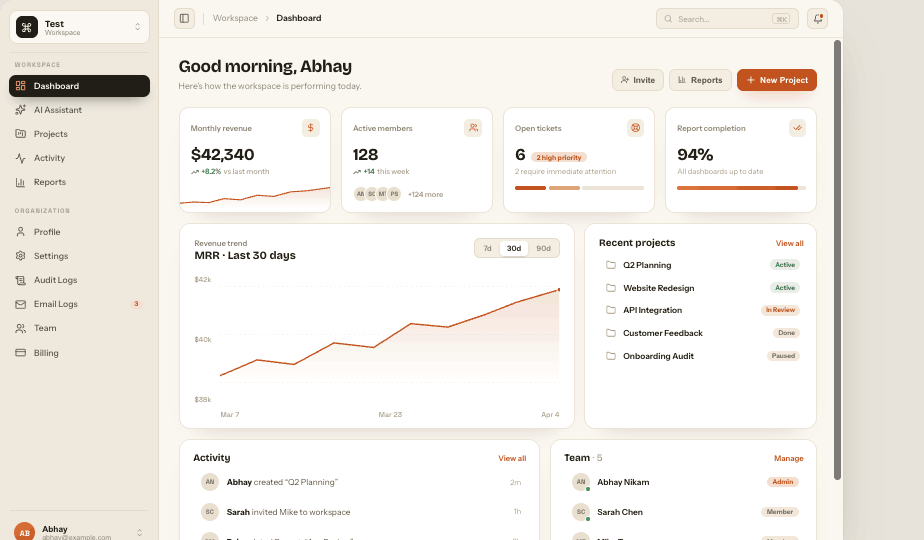
The Rails + React starter with everything a real SaaS needs already wired: multi-tenant auth, Stripe billing, background jobs, admin, and an in-app AI assistant. Skip three months of plumbing and ship your idea this week.
Hi there,
Every product I started opened the same way: Devise, OAuth, two-factor, accounts and roles, invitations, Stripe webhooks, a job queue, mailers, an admin panel. None of it was the product. All of it had to work before the product could.
So I automated it. boring_generators is a set of real Rails generators: one command, like rails generate boring:devise:install, installs a gem and configures it the way I would by hand.
It made each piece fast. But the pieces still had to be wired to each other, and that wiring was where the weeks actually went.
It was time to stop rebuilding.
Generators install parts; a product needs those parts to agree. Which account owns a Stripe customer? Who can read an audit log? What happens to open sessions when 2FA becomes required? I answered those once, in one codebase, and started [PROJECT ONE] and [PROJECT TWO] from it. That codebase is RailsPilot.
It isn’t a framework or a platform. It’s the version that worked for me. If you’re about to spend your first weeks on setup, you can start where I start instead.
I’m glad you’re here, and I’d love to hear what you build with it.
Day one is setup in a minute. Every day after is spent where the product actually lives.
$ bin/rails db:create db:migrate
$ bin/dev
  web   http://localhost:3000
  jobs  solid_queue worker started
  vite  ready in 312 ms
module Projects
  class Archive
    def self.call(...) = new(...).call

    def initialize(project:, user:)
      @project, @user = project, user
    end

    def call
      # auth, tenancy, audit trail: handled
      @project.update!(archived_at: Time.current)
    end
  end
end
Production code, tested and following Rails conventions, already agreeing with the rest of the stack.
Devise sessions, Google and GitHub OAuth, and TOTP two-factor with recovery codes.
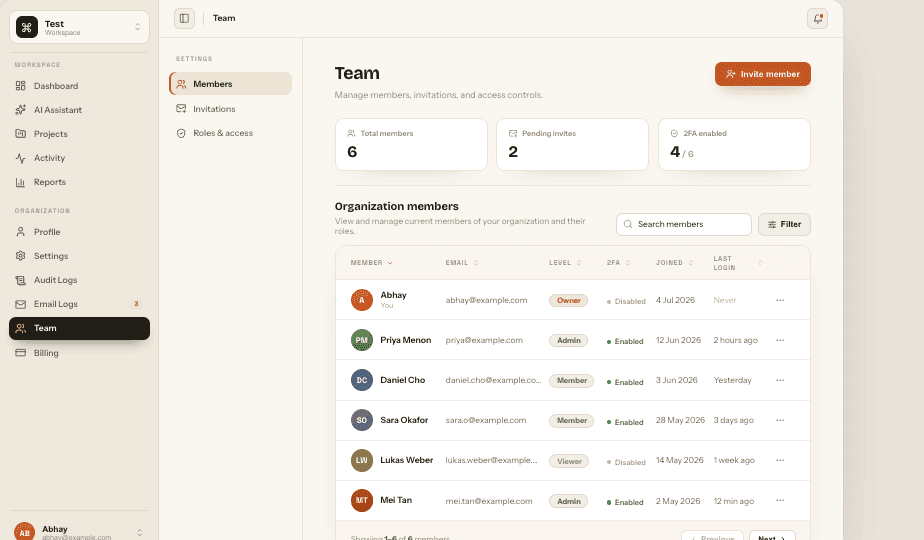
Owner, admin and member roles, email invitations, and readable slugs. Pundit policies per model, plus account rules for 2FA, login methods and session timeouts.
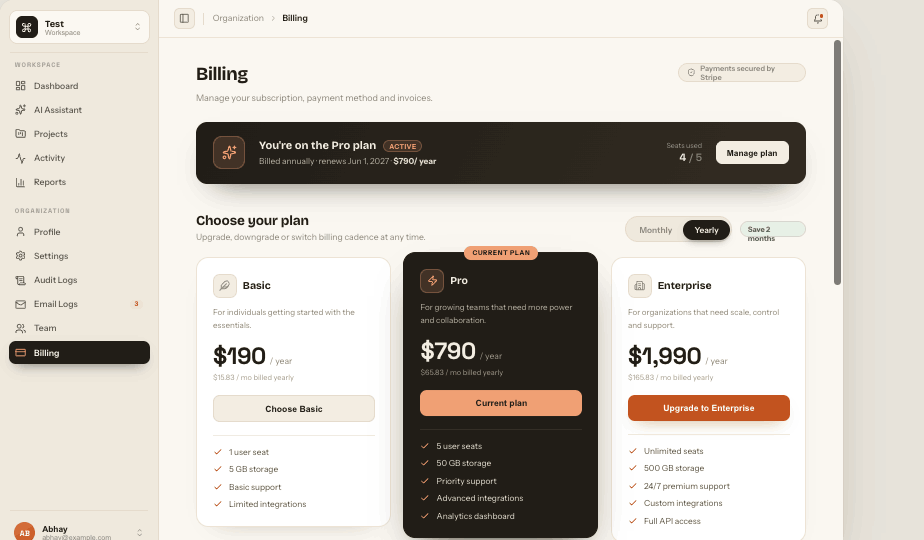
Checkout, customer portal and webhooks. Every account gets a Stripe customer from day one.
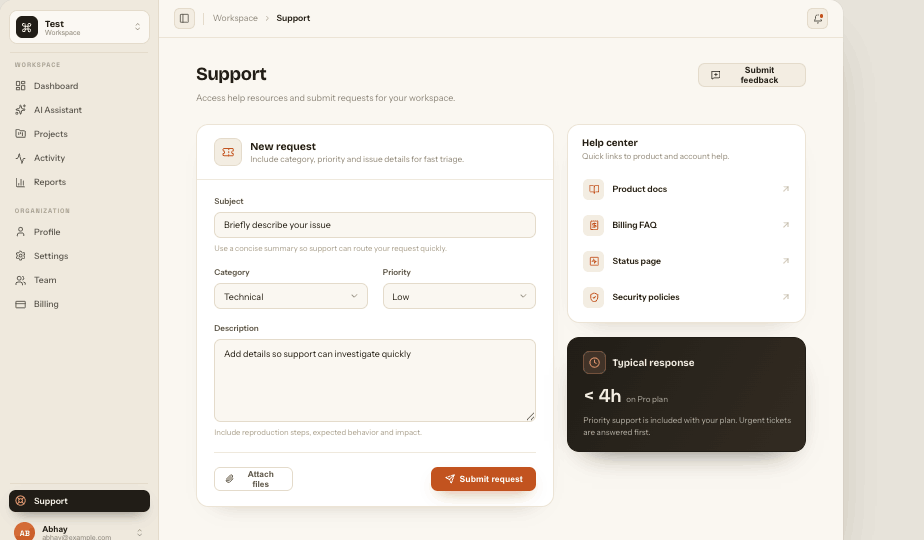
Admin panel, feature flags, SQL dashboards, maintenance tasks and impersonation.
A graphql-ruby schema with typed resolvers, mutations and object-level authorization, behind a React + TypeScript shell.
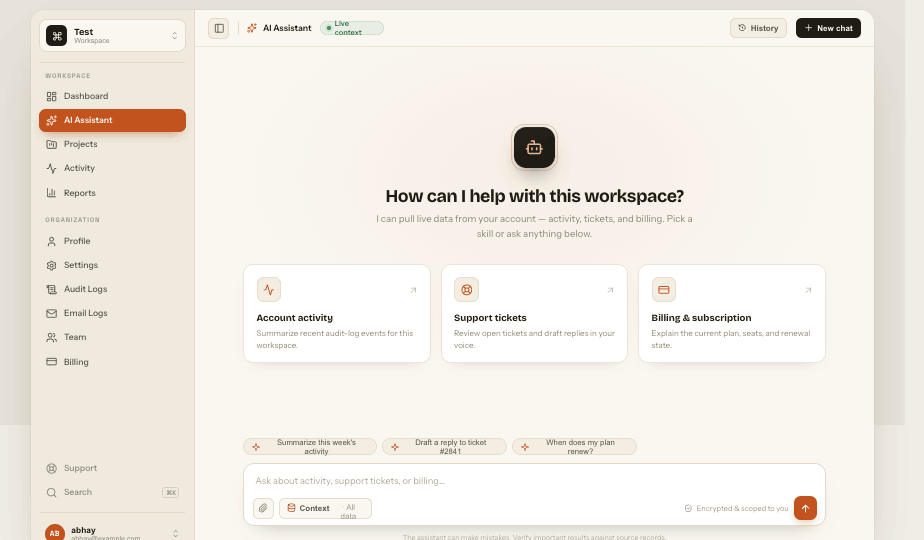
Claude-powered, with account-scoped skills grounded in the tenant’s real audit and billing data.
Solid Queue on Postgres with recurring jobs and a dashboard. No Redis to run.
Transactional mailers with delivery logs, and in-app notifications through noticed.
Kamal or Kubernetes, Sentry, an audit trail, secure headers and rate limiting.
I use coding agents every day, and they’re great at writing a webhook controller or a policy. What they can’t do cheaply is make a dozen pieces agree with each other, and agree the same way twice.That’s the part this template already settled.
| Topic | Prompting from rails new | Prompting from RailsPilot |
|---|---|---|
| Decisions | Who owns the Stripe customer, what 2FA does to open sessions, how roles gate data: answered fresh in every prompt, and differently each time. | Answered once, written down, and covered by specs. Your agent follows them instead of inventing them. |
| Trust | Thousands of lines nobody has reviewed yet. You own all of it from the first commit. | Code that has already run real products: [PROJECT ONE], [PROJECT TWO]. |
| Upkeep | A snapshot of whatever the model knew that day. The next Rails or Stripe upgrade is on you. | Lifetime updates as Rails, Stripe and the gems move on, and email support when something breaks. |
| Your agent | Builds the plumbing as it goes, and quietly skips what the brief didn’t name: payments, password reset, 2FA, audit logs. | Reads AGENTS.md, reuses the account, policy and billing code already there, and writes about half as much. |
How I start a project now.
Rename the app, run setup, and bin/dev brings up web, jobs and Vite together.
Stripe, OAuth, mail and Sentry live in per-environment Rails credentials. Anything unset degrades gracefully.
Type → resolver → service → model. One documented convention, so you and your AI agents always know where code goes.
It’s a regular Rails app, not a platform. Read it, change it, delete what you don’t need, and spend your first week on the product instead.
The full Rails 8.1 + React codebase for a multi-tenant SaaS: auth, accounts, Stripe billing, background jobs, admin, a GraphQL API, and every integration already wired together and tested.
boring_generators installs individual pieces. RailsPilot is those pieces already wired to each other, with the cross-cutting decisions (who owns what, who can see what) answered once and covered by specs.
You should be comfortable with both. It follows standard Rails conventions and a clean React front end. It’s a head start, not a no-code tool.
Yes. Pay once, use it for unlimited projects, and get every future update. No subscription, no per-seat or per-tenant fees.
Yes. There’s a 30-day money-back guarantee. If it doesn’t save you time, email me and I’ll refund you.
Still curious? Email me